
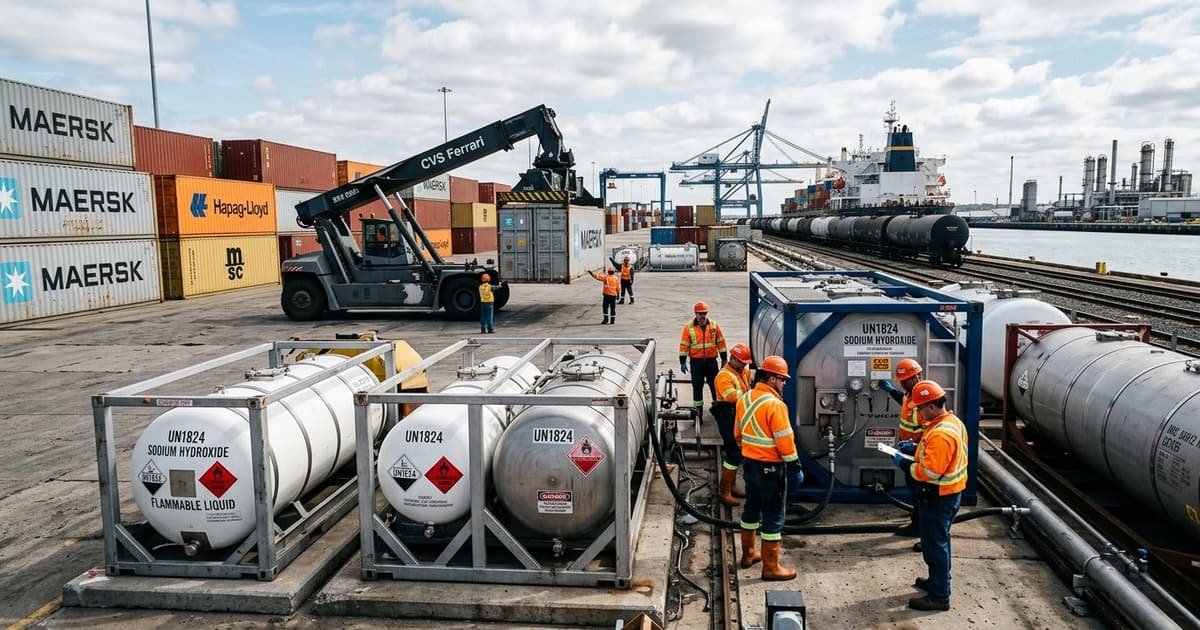
Hazardous cargo governed by the International Maritime Dangerous Goods (IMDG) Code is one of the most strictly monitored freight categories at Pakistan ports. Many clearing agents turn away dangerous goods due to complex compliance mandates, but MAC Enterprises specializes in handling regulated shipments safely and legally.
Mandatory Documentation for IMDG Shipments:
Before berthing, hazardous consignments require prior notification to Port Authorities (KPT / PQA) and Port Fire Safety Departments. The shipper must provide a Dangerous Goods Declaration (DGD) alongside Material Safety Data Sheets (MSDS).
- Ministry of Climate Change NOC: Mandatory for ozone-depleting substances, solvents, and industrial refrigerants.
- Explosives Department Permit: Required for Class 1 and flammable compressed gas cylinders.
- Direct Delivery Protocol: High-hazard containers (Class 2.1, Class 3) must be discharged directly onto specialized trailers for immediate removal from port premises.
The nine IMDG hazard classes at a glance
- Class 1: explosives
- Class 2: gases (flammable, non-flammable and toxic)
- Class 3: flammable liquids
- Class 4: flammable solids
- Class 5: oxidising substances and organic peroxides
- Class 6: toxic and infectious substances
- Class 7: radioactive material
- Class 8: corrosive substances
- Class 9: miscellaneous dangerous goods, including lithium batteries
Documents to prepare with the shipper
- Dangerous Goods Declaration with the UN number, proper shipping name, class and packing group.
- Safety Data Sheet (MSDS) for every product in the shipment.
- Container packing certificate for the loaded container.
- Commercial invoice and packing list that use the same product names as the MSDS.
Approvals that may apply in Pakistan
Depending on the product, clearance can depend on approvals from the Department of Explosives, ANF for controlled precursors, PNRA for radioactive material, the Ministry of Climate Change for ozone-depleting substances, or other regulators. These approvals take time, so they should be started before the cargo is shipped, not after it lands.
Why direct delivery planning matters
Some high-hazard cargo cannot wait in the terminal and must be taken out directly after discharge. That means the clearance, the approvals and suitable transport all have to be ready on the day of discharge.
How we handle regulated cargo
Hazardous, controlled and liquid bulk consignments are a core part of our work as customs clearing agents in Karachi. We review the MSDS and documents before shipment, apply for the approvals the cargo needs, and coordinate with the terminal for discharge and delivery. Send your MSDS and invoice on WhatsApp 0344 5138903 or see the cargo categories we clear.
Before you book a dangerous goods shipment
- Get the MSDS from the manufacturer and confirm the UN number, class and packing group.
- Check whether the product needs an import approval in Pakistan, and start the application early.
- Confirm that the shipping line accepts the cargo and the class on that route.
- Agree on packaging, labels and marks with the shipper so they meet the IMDG Code.
- Share the documents with your clearing agent before the container is loaded.
Packaging, labels and marking
Dangerous goods must travel in approved packaging, with the correct hazard labels and markings on every package and placards on the container. The proper shipping name and UN number on the packages must match the Dangerous Goods Declaration, the MSDS and the invoice. A mismatch can stop the cargo at loading, at the port of discharge or during customs examination.
At the port in Karachi
Terminals in Karachi handle dangerous goods under special arrangements, and some classes are kept in designated areas or must be removed quickly after discharge. That is why the clearance, approvals and suitable transport should all be arranged before the vessel arrives. Our team coordinates with the terminal and the transporter so the container moves out as soon as it is released.
Lithium batteries and Class 9 cargo
Lithium batteries, whether shipped alone or inside equipment, are Class 9 dangerous goods. Solar and backup power imports often include them. Make sure the batteries are declared correctly by the shipper and that their specifications are available for classification. Read more in our solar panel, inverter and battery import guide.
Common mistakes with regulated cargo
- The product name on the invoice differs from the MSDS and the declaration.
- The import approval is applied for only after the cargo arrives.
- Missing or wrong hazard labels on the packages.
- No transport arranged that is suitable for dangerous goods.
Frequently asked questions
Do all chemicals need special approval?
No. It depends on the substance. Some need approval from a regulator, others clear with standard documents and an MSDS. We check this from the MSDS before shipment.
Can dangerous goods stay at the terminal like normal cargo?
Not always. Some classes must be removed quickly, so planning ahead is essential.
See the full import documents checklist, explore our customs clearance services or contact our Karachi office.